
As dietitians, we have plenty of requirements to keep up with: CEUs, learning plans, documentation, deadlines, certificates, ethics credits… the list goes on. And sometimes, continuing education can feel more like checking a box than actually learning something that changes the way you practice.
And if you work in prenatal nutrition, women’s health, gestational diabetes, fertility, or postpartum care, you know there’s a big difference between earning prenatal nutrition CEUs and gaining knowledge you can actually use with your pregnant clients.
That gap is exactly what led me to create more prenatal nutrition CEUs for dietitians.
My formal training as a registered dietitian did not fully prepare me to work in prenatal nutrition. In my university studies, pregnancy nutrition was covered briefly in a lifecycle nutrition course. My dietetic internship gave me plenty of clinical experience, but very little of it was focused on prenatal nutrition in any meaningful depth.
Once I started working with pregnant clients, I quickly realized how much I still had to learn.
I spent years digging through research studies, working directly with clients, consulting on programs, writing books, and advising on prenatal nutrition policy. That deep dive shaped the approach I use today — one that is evidence-based, practical, real food focused, and willing to question outdated assumptions when the research warrants it.
Over the years, I also heard from more and more practitioners who were using my books to guide their own client care. Many told me some version of the same thing:
“I didn’t get this level of prenatal nutrition training in school.”
Most dietitians receive very limited training in prenatal nutrition, despite the fact that nutrition before and during pregnancy has lifelong implications for both mother and baby. And yet, in practice, we’re expected to understand the research, assess nutritional status, communicate ethically about risk and uncertainty, and apply that knowledge to complex real-life scenarios — from fertility and pregnancy to gestational diabetes, postpartum recovery, and beyond.
That’s why I started creating additional continuing education opportunities for RDs and other health professionals. Not just something to rush through for CEUs, but resources that are actually useful in practice.
Prenatal Nutrition CEUs for Dietitians: CDR-Approved Continuing Education
What makes prenatal nutrition CEUs different?
Prenatal nutrition is not simply “general healthy eating, but during pregnancy.”
In practice, prenatal nutrition counseling often involves far more than what to eat. You may be helping clients navigate symptoms, nutrient deficiencies, supplement decisions, blood sugar concerns, pregnancy complications, postpartum recovery, and breastfeeding — often while sorting through conflicting advice from guidelines, other providers, social media, and everywhere in between.
And every client brings her own labs, symptoms, medical history, budget, cultural food preferences, access to care, and risk factors.
This is where nutrition counseling becomes both an art and a science.
Good prenatal nutrition continuing education should help you think more critically, communicate more clearly, and apply the research in real-world scenarios — not just memorize another set of generic pregnancy nutrition guidelines.
That’s the goal behind the resources below.
Prenatal nutrition CEUs from books
Although my books were written to be accessible for the general public, they were also written with practitioners in mind.
That was intentional.
I wanted women to be able to read them and feel equipped to make informed decisions. But I also wanted dietitians, midwives, physicians, nurses, and other health professionals to have a resource that goes far beyond generic prenatal nutrition talking points.
Many practitioners have told me they keep these books on hand as clinical references, given the level of research, citations, physiology, and practical application included throughout.
For RDs, both of the following book-based CEU options are pre-approved by the Commission on Dietetic Registration.
Real Food for Pregnancy CEUs
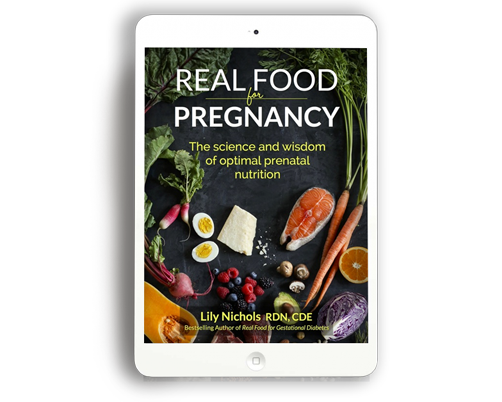
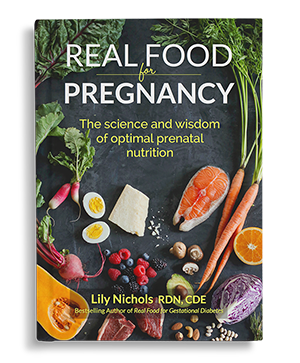
My bestselling book, Real Food for Pregnancy, covers the “why” behind nutrient-dense, real food nutrition in pregnancy, including macronutrient needs, key micronutrients, prenatal supplements, blood sugar balance, common pregnancy symptoms, food safety, pregnancy complications, postpartum recovery, and breastfeeding.
The book includes over 900 in-text citations and has become a go-to reference for many practitioners who want a more nuanced, practical, and research-backed approach to prenatal nutrition (It’s even used as a textbook in Bastyr University’s midwifery program and numerous other university programs).
For RDs, Real Food for Pregnancy is pre-approved by the Commission on Dietetic Registration for 45.5 CEUs.
This is a great option if you want a flexible, self-study continuing education activity that gives you a broad foundation in prenatal nutrition while still being practical enough to apply with clients.
👉Access Real Food for Pregnancy CEUs here
Real Food for Fertility CEUs
Real Food for Fertility, co-authored with Lisa Hendrickson-Jack, takes a deep dive into preconception nutrition and reproductive health.
This book is especially relevant for practitioners who work with clients before pregnancy — whether they are trying to conceive naturally, considering fertility treatments, navigating cycle irregularities, or wanting to optimize their health before pregnancy.
It covers topics such as preconception nutrition, egg and sperm quality, blood sugar and metabolic health, PCOS, hypothalamic amenorrhea, recurrent miscarriage, endometriosis, male fertility, cycle health, nutrient status, lifestyle factors, environmental exposures, fertility-supportive dietary patterns, and so much more.
With over 2,300 in-text citations, this book provides more data than most textbooks, but in a far more engaging and clinically useful format.
For RDs, Real Food for Fertility is pre-approved by the Commission on Dietetic Registration for 48.25 CEUs.
This is a strong option if you work with fertility or preconception clients and want a self-study continuing education activity that goes far beyond generic preconception advice.
👉Access Real Food for Fertility CEUs here
Prenatal nutrition CEU webinars:
Free webinar: Nutritional Assessment in Pregnancy CEU Webinar
One area that often gets overlooked in prenatal nutrition care is assessment.
It’s very easy for prenatal nutrition counseling to turn into a quick checklist: take a prenatal vitamin, avoid certain foods, gain the “right” amount of weight, eat enough calories, and come back next visit.
But that barely scratches the surface.
A thorough nutrition assessment in pregnancy should consider dietary intake, symptoms, labs, supplements, medical history, metabolic health, food access, and risk factors for nutrient deficiencies or pregnancy complications.
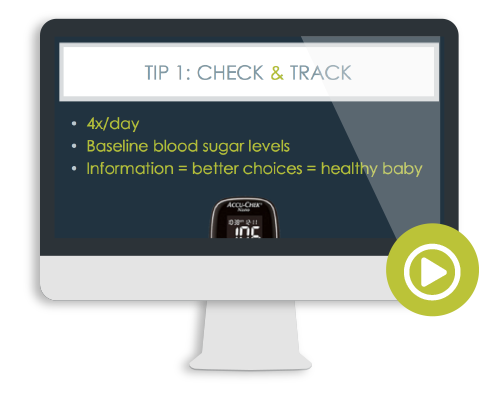
That’s why I created a free webinar on “Nutritional Assessment in Pregnancy”. It’s 100% free and available on-demand, so you can watch it whenever it fits your schedule.
In this training, I walk through how to think more critically and practically about prenatal nutrition assessment, including what to look for beyond the basics and how to better identify areas where a client may need more support.
This training is especially relevant for those who work with pregnant clients and want a better understanding of the assessment considerations that are unique to pregnancy.
For RDs, it is pre-approved by the Commission on Dietetic Registration for 1.5 CEUs.
👉 Access the free Nutritional Assessment in Pregnancy webinar here.
It’s 100% free and available on-demand, so you can watch it whenever it fits your schedule.
Ethics in Prenatal Nutrition CEU Webinar
Ethics continuing education can sometimes feel a little disconnected from day-to-day practice. And let’s be honest, it’s not always the CE category we get most excited about. But in prenatal nutrition, ethical questions come up constantly.
- How strongly should you phrase a recommendation when the evidence is limited?
- How do you explain risk without creating unnecessary fear?
- How do you talk about nutrient gaps, supplement options, or food choices when a client has limited resources, strong preferences, or conflicting advice from other providers?
These questions, and many others like it, show up in conversations with clients, in social media content, in supplement recommendations, in discussions about food safety, and in how we interpret and communicate research.
Prenatal nutrition is an area where the stakes feel high, but the evidence is not always as complete or definitive as we would like. That makes it especially important to communicate in a way that is clear, accurate, transparent, and centered on informed decision-making.
That’s why I created my “Ethics in Prenatal Nutrition” webinar.
This presentation walks through common ethical challenges in prenatal nutrition counseling and education, including how to communicate risk and uncertainty, avoid fear-based or absolutist messaging, think through conflicts of interest, and support clients in making informed choices within the realities of their lives.
It also includes case scenarios and example scripts, because the real challenge is often not “what does the research say?” but “how do I say this clearly and responsibly to the person in front of me?”
For RDs, this webinar is pre-approved by the Commission on Dietetic Registration for 1 ethics CEU.
👉 Access the Ethics in Prenatal Nutrition webinar here
For practitioners looking to specialize in prenatal nutrition, check out the Institute for Prenatal Nutrition Mentorship Program
The CEU options above are a great way to deepen your knowledge in specific areas of prenatal nutrition.
But if you’re ready for a more comprehensive, mentored path — one designed to help you truly specialize in this field — that’s where the Institute for Prenatal Nutrition® Mentorship Program (IPN) comes in.
IPN is an 18-week comprehensive certification course in prenatal nutrition designed for health practitioners who already have a science and nutrition background — including dietitians, nutritionists, physicians, midwives, physician assistants, acupuncturists, and other licensed professionals.
I created IPN for practitioners who want to go far beyond the basics and feel more confident applying prenatal nutrition research in real-life client care.
In IPN, we spend time on the details that matter in practice: physiology, research, clinical decision-making, and the real-life scenarios that don’t fit neatly into generic guidelines.
The curriculum includes topics such as pregnancy physiology, macronutrient and micronutrient requirements, pregnancy nutrition myths and facts, nutritional and clinical assessment, lab testing, supplements, gestational diabetes, hypertensive disorders, pregnancy weight gain, twin/multiple pregnancies, postpartum recovery, breastfeeding, and more.
But IPN is not just about consuming information.
The program includes in-depth recorded classes, weekly live Q&A calls with me, case studies, assignments, curated research, and a private community forum. The goal is not simply to know more, but to become more confident applying that knowledge in practice.
Upon successful completion, participants earn the title of “Specialist in Prenatal Nutrition” and may use the initials SPN after their name.
If you’re a health professional ready to specialize in this vital area and want structured mentorship along the way, check out the IPN program.
👉 Learn more about the Institute for Prenatal Nutrition® here
Enrollment opens only once a year and space is limited. Make sure to join the waitlist to be notified when we are accepting applications.
Deepening your prenatal nutrition education
The reality is that most of us did not receive enough prenatal nutrition training in school to feel truly prepared for the questions that come up in practice.
This is a major gap in conventional dietetics training.
The good news is that there are ways to keep building your knowledge — in a way that is practical, evidence-based, and directly relevant to client care.
- The book-based CEUs offer a flexible way to deepen your understanding of fertility and prenatal nutrition while earning a substantial number of CEUs.
- The Nutritional Assessment in Pregnancy webinar gives you a practical framework for thinking more critically about assessment, rather than relying on a basic prenatal nutrition checklist.
- The Ethics in Prenatal Nutrition webinar helps you think through the real-world communication challenges that come up in this field — risk, uncertainty, supplements, food choices, misinformation, and informed decision-making.
- And the Institute for Prenatal Nutrition® Mentorship Program is there for practitioners who are ready for a more comprehensive, mentored path to specialize in prenatal nutrition.
What I can say is this: we need more well-trained practitioners in this field!
Pregnant women deserve nutrition care that is evidence-based, practical, individualized, and not rooted in outdated assumptions. RDs and other health professionals deserve continuing education that actually helps them provide that level of care.
Until next time,
Lily
PS — If you are not an RD, you may still be able to use some of these trainings for continuing education depending on your credentialing organization. Please check with your own credentialing board or professional organization to confirm whether they will accept these activities.
PPS — For RDs, each CEU activity has its own expiration date for pre-approved CEUs, so be sure to review the details for each one. You’ll need to complete the required steps before the activity expires in order to receive credit. CEU amounts, approvals, and expiration dates can change in the future, so always refer to the current checkout/course page for the most up-to-date details.