We’re often told that chronic disease is inevitable — that if it “runs in the family,” there’s little we can do to change the outcome. Yet genetics alone don’t explain the dramatic rise in metabolic disease over just a few generations, and especially the rise in childhood metabolic issues. Research in developmental biology and nutrition points to something else entirely: early-life exposures, especially your diet during pregnancy and even before pregnancy, help shape how genes are expressed (aka “epigenetics”) and how metabolism functions long term.
This concept has been around since before I was born, but it came on my radar decades ago, before I had even pursued a degree in nutrition, let alone devoted my career to prenatal nutrition and nutrition across the childbearing years.
During pregnancy, a developing baby is exquisitely sensitive to nutritional and metabolic cues from their mother. These signals don’t just influence birth weight or whether a pregnancy is considered “healthy” in the short term. They help program how a baby’s metabolism functions, how their brain develops, how their immune system responds, and even how their body regulates blood sugar and appetite for life. This field of research is often referred to as fetal programming or the developmental origins of health and disease (DOHaD), and it has transformed how we understand the long-term impact of prenatal nutrition.
I first learned about this concept in a roundabout way, not from thinking about prenatal nutrition, but thinking about children’s health. One of my big career goals as a bright eyed, bushy tailed, nutrition-curious teenager was to reduce the obesity and diabetes epidemic plaguing American children. At the time, I assumed that it came down to the child’s diet and activity levels alone. And while those two factors are also important, there’s plenty of kids who eat garbage food and get very little physical activity — and yet they don’t struggle with obesity. Why?
Well, it comes down to the child’s metabolism, and their metabolism doesn’t miraculously break from a mere 5 to 10 years of imperfect eating. Nope. Their metabolism is preprogrammed, at least to some extent, by their exposures in their mother’s womb (and can even be impacted by mom or dad’s health preconception!). A few years ago, I presented at the Metabolic Health Summit and this article summarizes some areas I expanded upon in my talk, “Metabolic Health Starts In Utero.”
Importantly, this isn’t about striving for dietary perfection or blaming parents for outcomes beyond their control. It’s about recognizing that certain nutritional factors during pregnancy play key roles in shaping early development — and that many of these factors are modifiable. Below, we’ll walk through five evidence-based ways a mother’s diet during pregnancy influences her baby’s health, focusing on areas where the research is especially strong and where conventional prenatal nutrition advice often falls short.
Health Starts in Utero: Evidence-Based Ways Pregnancy Diet Influences Baby’s Health
Before I dive in, I want to provide a bit more context on the concept of fetal programming.
History of Fetal Programming
Fetal programming or the Developmental Origins of Health and Disease (DOHaD) has been the backbone of my work in prenatal nutrition, gestational diabetes, and “real food” approaches to pregnancy long before it was trendy on social media.
The concept of fetal programming really took off with the work of epidemiologist David Barker. He and others noticed that babies who were smaller at birth — especially when small for their gestational age, not just born early — had higher rates of heart disease, stroke, hypertension, and type 2 diabetes decades later. In other words, something about the in-utero environment was “training” the baby’s metabolism in ways that didn’t fully show up until mid-life. Barker summarized this as “the developmental origins of adult disease.”
One of the most striking natural experiments was the Dutch Hunger Winter of 1944–1945. Pregnant women exposed to severe famine gave birth to babies who, as adults, had higher rates of impaired glucose tolerance and type 2 diabetes — especially when famine exposure occurred in late pregnancy and those individuals later became obese. The body essentially “learned” to expect a low-food environment, then struggled when modern food abundance showed up.
Before DOHaD was part of my vocabulary, this general idea was what drew me to the work of Dr. Weston A. Price. His observations of traditional cultures showed stark intergenerational changes — narrower dental arches, more crowded teeth, higher rates of decay, altered facial structure, and lower resistance to infectious diseases — when nutrient-dense ancestral diets were displaced by refined flours, sugars, and canned foods (as he called, “foods of modern commerce”). The changes didn’t take many generations; they showed up in the very next one. His work made a powerful visual case that what parents eat affects how children build their bodies. I highly recommend reading his book, Nutrition and Physical Degeneration. The photos are astounding.
Later, when I started working clinically in gestational diabetes care, those early impressions collided with modern data and everything clicked: blood sugar, micronutrients, and overall diet quality in pregnancy aren’t just about reducing complications during the pregnancy itself. They’re about shaping the metabolic “operating system” your baby will run for life. It was while working at the California Diabetes and Pregnancy Program: Sweet Success, that I learned how a baby’s exposure to high maternal blood sugar levels predisposed them to developing type 2 diabetes later in their life. And this risk is not minor, it’s a six to nineteen-fold higher risk of type 2 diabetes when a mother’s blood sugar control is suboptimal.
So with a little history lesson out of the way, let’s dive into some evidence-based ways pregnancy diet influences baby’s health. The goal with this article is to empower you on your day-to-day diet choices in pregnancy.
And if you need additional support and guidance, this is precisely what I offer in my books as well as my professional mentorship.
Maternal Glucose Levels (Blood Sugar Levels)
Maternal blood sugar levels during pregnancy are one of the most powerful and best-studied nutritional signals shaping a baby’s development. Importantly, the effects of glucose exposure exist along a continuum. This isn’t just a concern for women diagnosed with gestational diabetes. Even modest elevations in maternal glucose, well below diagnostic thresholds, can influence fetal growth patterns and long-term metabolic health.
When maternal blood sugar rises, glucose readily crosses the placenta (the placenta does not prevent excess glucose from reaching baby). The fetus responds by producing more insulin, a growth-promoting hormone that lowers its glucose levels (that’s because a mom’s insulin does not cross the placenta, so the baby’s own pancreas has to release insulin). While this adaptive response supports energy storage and growth in the short term, chronic exposure to higher glucose levels can lead to fetal hyperinsulinemia, increased fat deposition, and alterations in long term appetite regulation and insulin sensitivity. In other words, these babies are born without the same metabolic flexibility we expect; they’re essentially insulin resistant at birth.
One of the most influential studies in this area is the Hyperglycemia and Adverse Pregnancy Outcome (HAPO) Study, which followed more than 23,000 pregnancies from women in 11 countries. Researchers found a continuous relationship between maternal glucose levels and outcomes such as higher birth weight, increased neonatal body fat, and elevated cord blood insulin — even in women who did not meet criteria for gestational diabetes. There was no clear “safe cutoff” below which glucose exposure had no effect, meaning if we want optimal pregnancy outcomes, we need to help moms achieve optimal glucose levels.
A follow-up of this cohort (the HAPO Follow-Up Study) brought back over 4,800 children at ages 10–14 and looked at their body composition. Higher maternal fasting, 1-hour, and 2-hour glucose levels during pregnancy were each associated with higher odds of the child being overweight or obese, having more body fat, and larger waist circumference (even after adjusting for mom’s BMI). For each standard-deviation increase in maternal 1-hour glucose, for example, the odds of child adiposity measures above the 85th percentile rose roughly 11–19%.
Longer-term follow-up studies have linked higher maternal glucose exposure in utero to increased risk of childhood obesity, insulin resistance, and impaired glucose tolerance later in life. These findings help explain why metabolic risk can appear early in childhood, even before years of poor diet or inactivity could plausibly account for it. It’s as if the metabolic cards were stacked against them even before they were born.
This is what we mean by fetal programming of metabolic health: the intrauterine environment leaves a “metabolic fingerprint” that tracks into later childhood and even adulthood.
Maternal glucose levels may also influence neurodevelopment. Emerging research suggests associations between dysregulated maternal glucose metabolism and differences in fetal brain development, cognitive outcomes, and neurobehavioral patterns, likely mediated through oxidative stress, inflammation, and altered nutrient delivery to the developing brain.
The takeaway here isn’t that pregnancy requires perfect blood sugar control, but rather that glucose regulation matters for everyone, not just those with a gestational diabetes diagnosis. Dietary patterns that support stable blood sugar — namely, adequate protein, healthy fat intake, nutrient-dense carbohydrates (at a level that your body can handle), and avoidance of excessive refined sugars/starches — play a meaningful role in shaping a baby’s metabolic environment from the very beginning.
This is why blood sugar balance has always been a cornerstone of my approach to prenatal nutrition and gestational diabetes management (as I teach in thorough detail in my books, Real Food for Gestational Diabetes and Real Food for Pregnancy). When we keep blood sugar within a healthy range during pregnancy, we’re not just chasing better numbers on a meter; we’re reducing the baby’s exposure to high glucose and insulin in utero — and this supports them having a healthy body composition and metabolism for life. That’s powerful stuff, and hopefully motivating!
Luckily, the same dietary steps you take to optimize glucose levels also provide a more well-rounded and nutrient-dense diet too.
Protein Intake
One of the most effective ways to support healthy blood sugar levels during pregnancy is by focusing on adequate protein intake. Protein helps slow glucose absorption, reduces post-meal blood sugar spikes, and supports more stable insulin signaling. Back when I was developing my dietary approach to gestational diabetes management (that I eventually wrote about in Real Food for Gestational Diabetes, which by the way came years after applying my method in clinical practice with incredible results), one area I noted we needed to significantly improve upon in the conventional dietary recommendations was the low protein goals. The women I was working with struggled so much with satiety and blood sugar spikes when they followed the conventional low-protein diet!
And you know what? Eventually a team of researchers (in 2015) finally measured protein requirements in pregnancy directly — something that had never been done — and their findings aligned almost exactly to the amount of protein I had found clinically to be necessary to achieve glucose control! Imagine that.
But protein’s role in pregnancy goes far beyond blood sugar control. Protein provides the raw materials (amino acids) needed to build fetal tissues, enzymes, hormones, and structural components of every organ system. During pregnancy, demands for protein increase substantially as maternal blood volume expands, the placenta grows, and fetal tissues rapidly develop. When protein intake is inadequate, the body is forced to prioritize immediate survival needs, potentially altering how fetal growth and organ development are programmed.
Research on fetal programming has consistently shown that low maternal protein intake is associated with changes in fetal growth patterns and long-term health outcomes. Both human observational studies and controlled animal models link insufficient protein during pregnancy to intrauterine growth restriction, reduced lean body mass, altered kidney and pancreatic development, and higher risk of cardiometabolic disease later in life — including elevated blood pressure and impaired glucose regulation.
Importantly, these effects aren’t limited to severe protein deficiency. Even moderately low protein intake during critical windows of development has been shown to influence how tissues develop and how metabolism functions long term. In fetal programming research, this is often described as a “thrifty” adaptation — where the developing baby adjusts to what appears to be a low-protein environment, with consequences that may become problematic when food is abundant later in life.
Protein intake also plays a key role in placental function. Having a sufficient supply of amino acids supports placental growth and nutrient transport capacity, helping ensure a steady supply of nutrients to the fetus. When protein intake is suboptimal, placental efficiency may be compromised, further amplifying the effects of other nutritional stressors.
Despite its importance, protein is one of the nutrients most commonly under-consumed during pregnancy — particularly among women advised to limit animal foods. Current protein recommendations for pregnancy are largely based on nitrogen balance studies from the 90s and they significantly underestimate true needs, especially in the second and third trimesters when fetal growth accelerates. Read more about that in my article on protein requirements in pregnancy and also within Real Food for Pregnancy.
From a practical standpoint, prioritizing protein-rich foods — such as eggs, meat, poultry, fish, dairy, and other nutrient-dense whole foods, like beans/legumes — supports not only maternal blood sugar regulation, but also the foundational building blocks of fetal growth and long-term metabolic health.
High Quality Fats
During pregnancy, fat isn’t simply an energy source — it’s a critical structural component of cell membranes, hormones, and signaling molecules, with especially profound effects on brain and immune development.
The developing fetal brain is approximately 60% fat by dry weight, and much of that fat is supplied directly from the mother. Long-chain polyunsaturated fatty acids — particularly docosahexaenoic acid (DHA) — are preferentially transported across the placenta and rapidly accumulated in fetal brain and retinal tissue, especially during the third trimester. Maternal intake and status strongly influence how much DHA is available to the fetus.
A substantial body of research links adequate DHA intake during pregnancy to improved visual acuity and neurodevelopmental outcomes in infancy and early childhood. DHA plays a key role in neuronal membrane fluidity, synapse formation, and neurotransmitter signaling. When maternal intake is low, fetal DHA accretion is reduced, an issue of concern given that many pregnant women consume little to no fatty fish and rely on diets disproportionately high in omega-6 fats. (If you’re concerned about eating fish in pregnancy, particularly due to mercury concerns, read this. And if you think you can just load up on flax and chia seeds, you’ll want to read this.)
Fat quality also influences immune system development and inflammatory programming. The balance of omega-3 and omega-6 fatty acids in the maternal diet affects eicosanoid production, immune signaling, and inflammatory responses in the developing fetus. Excessive omega-6 intake, particularly from industrial seed oils (what we used to call “vegetable oils”), may skew inflammatory pathways in a way that has implications for allergy risk, immune regulation, and cardiometabolic health later in life.
Cholesterol (which is often discouraged by dietary guidelines), plays essential roles in fetal development. Cholesterol is required for cell membrane integrity, steroid hormone synthesis, bile acid production, and brain development. The fetus synthesizes cholesterol, but maternal supply contributes meaningfully, particularly during periods of rapid growth. Low maternal cholesterol levels have been associated with impaired fetal growth and developmental concerns, underscoring that overly restrictive fat intake may be counterproductive. And of course, we cannot forget that cholesterol just happens to be found in many nutrient-dense foods, like organ meats and eggs.
Taken together, the research makes it clear that the type of fat consumed during pregnancy matters. Diets that include nutrient-dense fat sources — such as seafood, eggs, full-fat dairy, traditional animal fats, avocados, olives, and coconut — support optimal brain development, immune maturation, and metabolic signaling in ways that low-fat or highly refined diets simply do not.
Choline
Another reason not to fear the dietary fat and cholesterol in animal foods is that they are the richest sources of a vitamin-like nutrient called choline. Fat and cholesterol provides the structural framework for the developing brain, while choline helps determine how that brain is built, wired, and regulated. Choline plays multiple, overlapping roles in fetal development, serving as a building block for cell membranes, a precursor for the neurotransmitter acetylcholine, and a key player in one-carbon metabolism and DNA methylation. In other words, it influences both brain structure and gene expression during critical windows of development.
During pregnancy, choline demand increases substantially as fetal brain and nervous system development accelerate. Choline is actively transported across the placenta, often against a concentration gradient, underscoring its biological importance. It’s as if the baby is pulling choline from your body. And in a way, it is. Fetal plasma choline concentrations are substantially higher than maternal levels.
Research on choline and fetal programming is particularly compelling because it includes randomized controlled human trials in pregnancy, not just observational data. I’ve written about these studies in my detailed article on choline and pregnancy, as well as throughout my books.
Studies have shown that higher maternal choline intake during pregnancy is associated with improved markers of infant cognitive function, including information processing speed and memory, as well as more optimal stress regulation in offspring. These effects appear to persist beyond infancy, suggesting long-lasting changes in brain function rather than short-term developmental differences. Follow-up research tracking children from this same cohort into early school age (7 years) found persistent benefits in attention and cognitive function, particularly in tasks requiring sustained attention. Children whose mothers consumed higher amounts of choline during pregnancy (more than TWICE what the current recommended intake for pregnancy, by the way) demonstrated superior performance on measures of attentional regulation — an outcome consistent with choline’s known role in hippocampal development and cholinergic neurotransmission.
Choline’s role in epigenetic regulation may help explain these findings. As a methyl donor, choline influences DNA methylation patterns that regulate gene expression during development. Animal and human studies demonstrate that choline availability during pregnancy can alter the expression of genes involved in brain development, stress response, and metabolic regulation. These effects that can last well into adulthood.
Choline also interacts closely with other nutrients involved in one-carbon metabolism and methylation, including folate and vitamin B12 (more on these nutrients in the next section!). Adequate choline intake may help buffer against disruptions in methylation pathways, like excess alcohol or toxin exposure.
From a practical standpoint, choline intake is strongly tied to dietary patterns. The richest sources — such as egg yolks, liver, meat, and fish — are foods that many pregnant women are advised to limit or avoid, often without a clear nutritional replacement strategy. As a result, choline inadequacy has become one of the most common and least recognized nutrient gaps in pregnancy. I provide much more context to this conversation in chapter 4 of Real Food for Pregnancy.
Yet despite this, the vast majority (over 90%) of pregnant women consume far less choline than recommended, and some prenatal vitamins contain little — if any — choline at all.
I’ve been educating about the importance of choline long before anyone (outside of choline researchers) were talking about it publicly. I’ve watched the prenatal vitamin industry do a complete 180 on choline in the last 2 decades, and thankfully more formulations are including some. But you have to look closely on the label to see if they’re including substantial amounts or just “pixie” dust levels so they can slap a “contains choline” label claim on the bottle. But I digress…
Taken together, the evidence suggests that choline plays a unique and irreplaceable role in fetal brain development, cognitive function, and stress regulation. Ensuring adequate choline intake during pregnancy is not about optimizing a single nutrient in isolation, but about supporting the complex biological processes that shape a child’s neurological foundation from the very beginning.
Other Key Micronutrients
Beyond choline, there are a number of other key micronutrients worth considering that play distinct roles in fetal development; and importantly, they don’t act in isolation. Nutrients involved in DNA synthesis, methylation, oxygen delivery, immune development, and cellular differentiation function as part of tightly integrated biochemical systems. During pregnancy, when growth and development are happening at a remarkable pace, disruptions in these systems can have lasting consequences.
Many micronutrients critical to pregnancy — including folate, vitamin B12, iron, and zinc — are directly involved in the processes that regulate gene expression and organ development. Like choline, these nutrients are involved in DNA synthesis, methylation, oxygen delivery, and cellular differentiation. During fetal development, these processes occur at extraordinary speed. When micronutrient supply is insufficient, imbalanced, or poorly absorbed, the developing fetus may adapt in ways that prioritize short-term survival at the expense of long-term health. For example, vitamin B12 deficiency during pregnancy or within the first year of life can cause irreversible brain damage that cannot be undone, even when B12 supplementation corrects deficiency later on.
But again, nutrients don’t act alone. One of the most studied examples is one-carbon metabolism, a network of biochemical reactions that depend on adequate folate, vitamin B12, choline, and related cofactors. These pathways regulate DNA methylation, a key epigenetic mechanism that determines which genes are turned on or off during development. Disruptions in methylation patterns during pregnancy have been associated with altered neurodevelopment, metabolic dysfunction, and increased disease risk later in life. Notably, emerging research suggests that excess synthetic folic acid intake, particularly in the context of inadequate B12 or choline status may also have unintended consequences — highlighting that balance matters as much as adequacy (and that the form of folate you consume matters too).
Iron status during pregnancy provides another clear example of fetal programming in action. Iron is essential for oxygen transport, brain development, and myelination. Even mild to moderate maternal iron deficiency — short of overt anemia — has been associated with impaired cognitive development, altered behavior, and changes in brain structure in offspring. These effects appear to persist beyond infancy, suggesting long-lasting impacts on neurological function rather than temporary delays. Learn why you want to be prioritizing highly bioavailable forms of iron in this article.
Zinc plays a similarly foundational role. It is required for DNA synthesis, cell division, immune development, and antioxidant defense. Zinc is also a co-factor for the enzyme responsible for absorbing dietary folate in the intestines (see how everything is connected?!). Inadequate zinc intake during pregnancy has been linked to impaired fetal growth, immune dysfunction, and increased susceptibility to infection — effects that may reflect both direct impacts on tissue development and broader changes in immune programming. Our best dietary sources of zinc (like oysters, clams, organ meats, and red meat) also happen to be incredibly rich in B12 and iron, no coincidence there!
What’s striking is that many of these micronutrient inadequacies occur despite prenatal vitamin use. This is partly because nutrient needs during pregnancy are higher than commonly appreciated, partly because bioavailability varies widely depending on nutrient form and food matrix, partly because supplements cannot fully replicate the complex interactions found in nutrient-dense whole foods, and partly because so many prenatal vitamin formulations are absolutely dismal. Ok, that’s a lot of possible reasons!
From a fetal programming perspective, this reinforces a central theme: nutrient density matters more than meeting isolated targets. Diets rich in high-quality animal foods, seafood, eggs, legumes, vegetables, dairy, fruit, and minimally processed whole foods provide a spectrum of micronutrients in forms that support absorption, balance, and synergy. These dietary patterns help create a metabolic and epigenetic environment that supports optimal development not just at birth, but across the lifespan.
Key Takeaways on Fetal Programming and Prenatal Nutrition
The research is clear: pregnancy represents a powerful window of opportunity in shaping long-term health. Nutritional signals during this time don’t simply influence birth outcomes — they help program how a child’s metabolism functions, how their brain and immune system develop, and how their body responds to stress and disease risk across the lifespan.
At the same time, this body of evidence should not be interpreted as a call for dietary perfection or fear-based decision-making. Biology is resilient, and no single meal or nutrient determines a child’s future health. Rather, the science of fetal programming highlights the value of consistent, nutrient-dense dietary patterns that support stable blood sugar, adequate protein and fat intake, and sufficient micronutrients during key developmental windows. Celebrate every time you’re able to squeeze in some nutrient-dense whole foods, but don’t drive yourself crazy!
What’s often missing from conventional prenatal nutrition advice is not concern for outcomes, but specificity. Women need clear guidance on which nutritional factors matter most and why, which is something I’ve devoted my entire career and multiple books to explaining.
When we understand the mechanisms at play, it becomes easier to focus on meaningful changes rather than arbitrary rules (and boy are there a lot of unfounded and arbitrary rules — see chapter 4 of Real Food for Pregnancy for my take on those “foods to avoid” lists). Supporting maternal nutrition during pregnancy is about creating the most supportive environment possible for both mother and baby.
Take heart because there is a lot we can influence:
- Keeping blood sugar in a healthy range, especially after meals, rather than dismissing post-meal spikes as “normal for pregnancy”
- Centering meals around real, nutrient-dense foods — quality protein, healthy fats, vegetables, and traditionally valued foods like eggs, seafood, and organ meats — rather than highly refined, ultra-processed products
- Being intentional about key micronutrients like choline, DHA, B12, iron, and zinc, especially if your usual diet or symptoms (like nausea or aversions) make them harder to get
- Working with clinicians who actually understand both fetal programming and the practicalities of eating during pregnancy, not just checking off boxes on a guideline chart
You’re not responsible for “perfect” fetal programming (that doesn’t exist). But I do encourage you to honor just how powerful this window is — and to choose a way of eating in pregnancy that supports not only your own health now, but your baby’s metabolic resilience for years to come.
That’s the heart of my work: helping you translate a dense body of research into everyday, real-food choices that honor both the science and your lived experience (and hopefully in a way that tastes good!)
Ultimately, prenatal nutrition is one of the few modifiable factors we have that can influence health across generations. We can’t change our genes, but we can influence how they’re expressed. By prioritizing real, nutrient-dense foods during pregnancy, we aren’t just nourishing a growing baby — we’re investing in a foundation for lifelong health that begins long before the first bite of solid food.
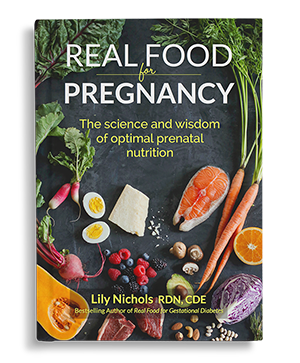
If you’d like to read more about how to optimize your pregnancy outcomes using real food, pick up a copy of my bestselling book, Real Food for Pregnancy. If you’re currently managing a gestational diabetes diagnosis, you’ll also want a copy of Real Food for Gestational Diabetes to go with it.
And if you’re in the preconception phase, there’s a number of steps you can take in advance of your pregnancy, to further optimize your chances of the best possible outcomes for your baby. Real Food for Fertility provides guidance for both partners! If you’re not currently pregnant, that is the book I’d recommend. For example, if you know you have insulin resistance/prediabetes, following the advice within chapter 11 can help not only improve your metabolism, but it may also reduce the risk that you’ll develop gestational diabetes in your future pregnancy.
Until next time,
Lily
PS – If you’re worried that you’re learning this information “too late” in your pregnancy to make a lasting impact on your baby’s health, I wrote this article for you. I have plenty of good news for you in it.
Furthermore, if you’re worried that your imperfect eating during the nausea phase has “ruined” your pregnancy, hear me: it has not. If you’re in the throes of nausea, please read and re-read the nausea section in chapter 7 of Real Food for Pregnancy and ignore the rest until your symptoms have subsided. Your body is doing amazing work right now.
References
- Lacagnina, Salvatore. “The developmental origins of health and disease (DOHaD).” American journal of lifestyle medicine 14.1 (2020): 47-50.
- Barker, D. J. P. “The Developmental Origins of Adult Disease.” Journal of the American College of Nutrition, vol. 23, no. 6, 2004, pp. 588S–595S.
- Lowe, William L., Jr., et al. “Maternal Glucose Levels during Pregnancy and Childhood Adiposity in the Hyperglycemia and Adverse Pregnancy Outcome Follow-up Study.” Diabetologia, vol. 62, no. 4, 2019, pp. 598–610.
- Metzger, Boyd E., et al. “Hyperglycemia and Adverse Pregnancy Outcomes.” The New England Journal of Medicine, vol. 358, no. 19, 2008, pp. 1991–2002.
- De Rooij, Susanne R., et al. “Lessons learned from 25 years of research into long term consequences of prenatal exposure to the Dutch famine 1944–45: the Dutch famine birth cohort.” International Journal of Environmental Health Research 32.7 (2022): 1432-1446.
- Taeubert, M. Jazmin, et al. “Adults prenatally exposed to the Dutch Famine exhibit a metabolic signature associated with a broad spectrum of common diseases.” BMC medicine 22.1 (2024): 309.
- Clausen, Tine D., et al. “High Prevalence of Type 2 Diabetes and Pre-Diabetes in Adult Offspring of Women with Gestational Diabetes Mellitus or Type 1 Diabetes: The Role of Intrauterine Hyperglycemia.” Diabetes Care, vol. 31, no. 2, 2008, pp. 340–346, doi:10.2337/dc07-1596.
- Lowe, William L., Jr., et al. “Association of Gestational Diabetes with Maternal Disorders of Glucose Metabolism and Childhood Adiposity.” JAMA, vol. 320, no. 10, 2018, pp. 1005–1016, doi:10.1001/jama.2018.11628.
- Ornoy A. Growth and neurodevelopmental outcome of children born to mothers with pregestational and gestational diabetes. Pediatr Endocrinol Rev. 2005 Dec;3(2):104-13. PMID: 16361984.
- Barros, M. A. V., et al. “Maternal low-protein diet induces changes in the cardiovascular autonomic modulation in male rat offspring.” Nutrition, Metabolism and Cardiovascular Diseases 25.1 (2015): 123-130.
- Godfrey, Keith M., and David J. P. Barker. “Fetal Nutrition and Adult Disease.” American Journal of Clinical Nutrition, vol. 71, no. 5 Suppl, 2000, pp. 1344S–1352S.
- Wu, Guoyao, et al. “Maternal Nutrition and Fetal Development.” Journal of Nutrition, vol. 134, no. 9, 2004, pp. 2169–2172.
- Wu, Guoyao, et al. “Amino Acids in Fetal Growth and Development.” Amino Acids, vol. 37, no. 1, 2009, pp. 1–11.
- Elango, Rajavel, et al. “Protein Requirements During Pregnancy: Evidence from Stable Isotope Studies.” American Journal of Clinical Nutrition, vol. 92, no. 2, 2010, pp. 375–381.
- Hu, Ruolan, et al. “Could early life DHA supplementation benefit neurodevelopment? A systematic review and meta-analysis.” Frontiers in Neurology 15 (2024): 1295788.
- Zou, Runyu, et al. “Maternal polyunsaturated fatty acids during pregnancy and offspring brain development in childhood.” The American journal of clinical nutrition 114.1 (2021): 124-133.
- Innis, Sheila M. “Dietary Omega 3 Fatty Acids and the Developing Brain.” Brain Research, vol. 1237, 2008, pp. 35–43.
- Dubrof, Stephanie, et al. “The effect of perinatal supplementation of DHA on specialized pro-resolving lipid mediators in the brain of offspring.” Biochimica et Biophysica Acta (BBA)-Molecular and Cell Biology of Lipids (2025): 159629.
- Calder, Philip C. “Omega-3 Fatty Acids and Inflammatory Processes.” Nutrients, vol. 2, no. 3, 2010, pp. 355–374.
- Miles, Elizabeth A., and Philip C. Calder. “Maternal Diet and Its Influence on the Development of Allergic Disease.” Clinical & Experimental Allergy, vol. 45, no. 1, 2015, pp. 63–74.
- Woollett, Laura A. “Maternal Cholesterol in Fetal Development: Transport of Cholesterol from Mother to Fetus.” American Journal of Clinical Nutrition, vol. 82, no. 6, 2005, pp. 1155–1161.
- Caudill, Marie A., et al. “Maternal Choline Supplementation during the Third Trimester of Pregnancy Improves Infant Information Processing Speed: A Randomized Controlled Trial.” FASEB Journal, vol. 32, no. 4, 2018, pp. 2172–2180.
- Bahnfleth, Charlotte L., et al. “Prenatal choline supplementation improves child sustained attention: A 7‐year follow‐up of a randomized controlled feeding trial.” The FASEB Journal 36.1 (2022): e22054.
- Zeisel, Steven H. “Choline: Critical Role during Fetal Development and Dietary Requirements in Adults.” Annual Review of Nutrition, vol. 26, 2006, pp. 229–250.
- Steane, Sarah E., James SM Cuffe, and Karen M. Moritz. “The role of maternal choline, folate and one‐carbon metabolism in mediating the impact of prenatal alcohol exposure on placental and fetal development.” The Journal of Physiology 601.6 (2023): 1061-1075.
- Koning, Irene V., et al. “Periconception maternal folate status and human embryonic cerebellum growth trajectories: the Rotterdam Predict Study.” PLoS One 10.10 (2015): e0141089.
- Sapehia, Divika, et al. “Pre-natal dietary imbalance of folic acid and vitamin B12 deficiency adversely impacts placental development and fetal growth.” Placenta 132 (2023): 44-54.
- Reynolds, Edward H., Agata Sobczyńska-Malefora, and Ralph Green. “Fortification, folate and vitamin B12 balance, and the nervous system. Is folic acid excess potentially harmful?.” European Journal of Clinical Nutrition 79.11 (2025): 1073-1077.
- Cochrane, Kelsey M., et al. “Pregnancy-induced alterations of 1-carbon metabolism and significance for maternal nutrition requirements.” Nutrition Reviews 80.9 (2022): 1985-2001.
- Berger, Paige K., et al. “Associations of maternal prenatal zinc consumption with infant brain tissue organization and neurodevelopmental outcomes.” Nutrients 17.2 (2025): 303.
- Georgieff, Michael K. “Iron Deficiency in Pregnancy.” American Journal of Obstetrics and Gynecology, vol. 223, no. 4, 2020, pp. 516–524.
- Ross, Madeline M., Diego R. Hernandez-Espinosa, and Elias Aizenman. “Neurodevelopmental consequences of dietary zinc deficiency: a status report.” Biological Trace Element Research 201.12 (2023): 5616-5639.



I’m so grateful I read your Real Food for Pregnancy book years ago when I was pregnant with my first baby. It completely transformed the way me and my family eat. I had never heard about how pregnancy diet shapes baby’s health in the way that you explain. Most of what I had heard was just from the perspective of what foods are unsafe in pregnancy ( and now I know a lot of that wans’t necessarily accurate either. I’ve had 2 pregnancies since and have 3 healthy children thanks to your work. Everyone had warned me about feeling terrible during pregnancy, and aside from some nausea at the start, I actually didn’t feel all that bad. Actually, I felt pretty darn energetic up until the last week or so. So thank you, Lily, for being a trail blazer. I know you’ve really shaped the direction the prenatal nutrition field is going. I never saw anyone talking about choline in pregnancy, or higher protein needs in pregnancy, or questioning the foods to avoid lists until I found your work. .Please keep writing!!!
That’s wonderful, Annabelle! I hear from a lot of women that they were surprised that they could feel good during pregnancy (and sometimes this is after multiple past pregnancies before they found Real Food for Pregnancy that were really really tough). Cheers to continuing to nourish yourself and your family, so everyone feels their best!
I just want to say how thankful I am for your pregnancy nutrition book, Lily. It gave me so much peace during pregnancy. Instead of feeling confused by all the mixed messages online, I felt clear and confident about how to nourish myself and my baby. And the information was practical and doable, but of course backed by a lot of research. My son is now 18 months and is exceeding all milestones. I have to think the choline and DHA in all the fish and eggs I was eating have played a role!
Appreciate your kind words, Marcia. I’m happy that Real Food for Pregnancy helped you ease some of the food fears and misinformation about what foods you can/cannot eat during pregnancy!
Lily, I truly cannot thank you enough for your work! I purchased ‘Real food for pregnancy’ in 2020 when I was pregnant with our first child. We’re now pregnant with our fourth and though I haven’t implemented all of your advice perfectly, it has been SO helpful and I love sharing what I’ve learned with others (esp. about Choline!).
Question on the glucose levels. I’ve had PCOS and though I’ve never tested positive for Gestational Diabetes, I think my glucose levels are generally a *little* high. What is the “ideal” level within the normal range? If you have a fasting glucose of 70 vs. 80 vs. 90 – do we have a sense for the tangible impact that actually has on the baby? I just started a CGM and am in my 19th week. Thank you!
Haley,
It’s great to hear Real Food for Pregnancy has been helpful in your pregnancies! Regarding your question on glucose levels in pregnancy, there’s a chart showing optimal blood sugar levels in chapter 9 of Real Food for Pregnancy. Also see this article, which discusses CGM in pregnancy.